A software developer resume gets shortlisted when it shows, quickly and credibly, what you can build, which technologies you have used, how you solve problems and what changed because of your work. That is the core of every good set of software developer resume tips, and it is where many strong candidates slip. They list tools without context, bury their best project on page two, or write bullet points that read like a job description. Recruiters scan fast, so unclear writing can hide real skill. This developer resume guide walks through each section, with illustrative examples you can adapt whether you are a fresher or an experienced engineer.
Quick Summary
- Use a single-column, reverse chronological layout with standard headings.
- Open with a two to three line summary written for the role you want.
- List only technologies you can discuss and demonstrate in an interview.
- Write each bullet as action, technology and outcome.
- Link a clean GitHub profile and at least one working project.
- Tailor every application, proofread it, and never exaggerate.
What Makes a Software Developer Resume Stand Out?
A strong software engineer resume lets a recruiter see your target role, core stack, best project and proof of impact in a quick first scan. It is specific, easy to read and backed by links they can check.
- Relevant technical skills: grouped by category and matched to the job posting.
- Practical project experience: real applications, not a list of tutorials.
- Clear achievements: outcomes such as faster pages, fewer bugs or smoother releases.
- ATS readability: a layout that applicant tracking systems can parse cleanly.
- GitHub and portfolio links: evidence that your code exists and is readable.
- Role-specific customisation: a backend Java role should lead with Java, Spring Boot and SQL, not front-end work.
In that first scan, a recruiter should be able to answer four questions. What role is this person targeting? Which languages and frameworks do they use? Where is the proof? Can I verify it online? If any answer needs digging, the resume needs editing.
Choose the Right IT Resume Format
For most developers, reverse chronological is the best IT resume format. A hybrid format suits career switchers and freshers with strong projects, and a functional format is rarely a good idea.
- Reverse chronological: lists roles from newest to oldest. Recruiters expect it, and ATS software parses it reliably. Best for experienced developers with steady progression.
- Functional: groups content by skill and hides dates. Many recruiters distrust it because it makes the timeline hard to follow.
- Combination (hybrid): a short skills and projects block on top, followed by a chronological history. Useful when your projects say more than your job titles.
Which format for whom? Experienced developers should choose reverse chronological. Freshers and career switchers can use a hybrid layout that puts projects first.
A clean IT resume format follows this order: name and contact links, professional summary, technical skills, work experience, projects, education, certifications. Freshers can move projects above work experience or internships.
Step-by-Step Guide to Writing a Software Developer Resume
Here is how to write a tech resume, one section at a time. Each step maps to a section of the finished document.
1. Write a Clear Professional Summary
A resume summary is two to three lines covering your experience level, strongest technologies and the role you want. Keep it specific.
Fresher example: “Computer science graduate with hands-on experience building REST APIs in Java and Spring Boot. Built a student attendance system using MySQL and React. Looking for an entry-level Java developer role.”
Experienced example: “Backend developer with five years of experience building Node.js and PostgreSQL services for e-commerce platforms. Comfortable owning features from design to AWS deployment. Seeking a senior backend role.”
Both examples are illustrative. Replace every detail with your own.
2. Highlight Relevant Technical Skills
Group your software developer skills so they scan quickly:
- Languages: Java, Python, JavaScript
- Frameworks: React, Node.js, Spring Boot
- Databases: SQL, MySQL, MongoDB
- Cloud and DevOps: AWS, Docker
- Tools: Git, GitHub, Postman
List only what you can code with and explain, because interviewers often pick questions straight from this section. Order items by relevance to the job and skip star ratings or skill bars. If you are considering AI work, a structured machine learning roadmap for beginners shows which skills and practical projects to complete before you add them to your resume.
3. Showcase Professional Experience With Measurable Results
Write each bullet as an action verb, what you built, the technology, and the result. Describe outcomes, not duties.
- Weak: Worked on website development.
- Better: Developed responsive web application components using React and improved page usability through reusable UI components.
- Weak: Fixed backend bugs.
- Better: Resolved slow API responses in a Node.js service by adding database indexes and caching, cutting load time on key endpoints.
Add a number only when you can verify it. These examples are illustrative and are not Akira projects or achievements.
4. Highlight Technical Projects
A strong project entry includes the project name, the problem it solves, the technology stack, your individual contribution, key functionality and, where verified, measurable outcomes.
Example: “Expense Tracker (React, Node.js, MongoDB): Built a web app that categorises personal spending. Designed REST APIs, added JWT authentication and deployed the app on a free cloud tier. GitHub and live demo links included.”
A README with setup steps and screenshots helps reviewers, and a live demo lets them see the work running. Two to four finished projects will serve you better than ten half-built ones.

5. Add Education and Certifications
List your degree, institution and graduation year. Freshers can add relevant coursework such as data structures, DBMS and operating systems. Experienced developers can reduce education to one line.
Include technical certifications only when they relate to the role, with the issuer and year. Training programmes can be listed too, especially when they produced projects you can show.
6. Include GitHub, LinkedIn, and Portfolio Links
Put these links in the header. Recruiters use GitHub to judge code readability, commit habits and documentation, and LinkedIn to confirm your work history. Pin your best repositories, keep your LinkedIn details consistent with the resume, and add a portfolio site if you target front-end or full stack roles. Open every link in a logged-out browser before you submit.
7. Optimise the Resume for ATS
An applicant tracking system stores and organises applications so recruiters can search them. An ATS-friendly resume is simply one that such software can read accurately.
- Standard headings: Summary, Technical Skills, Work Experience, Projects, Education.
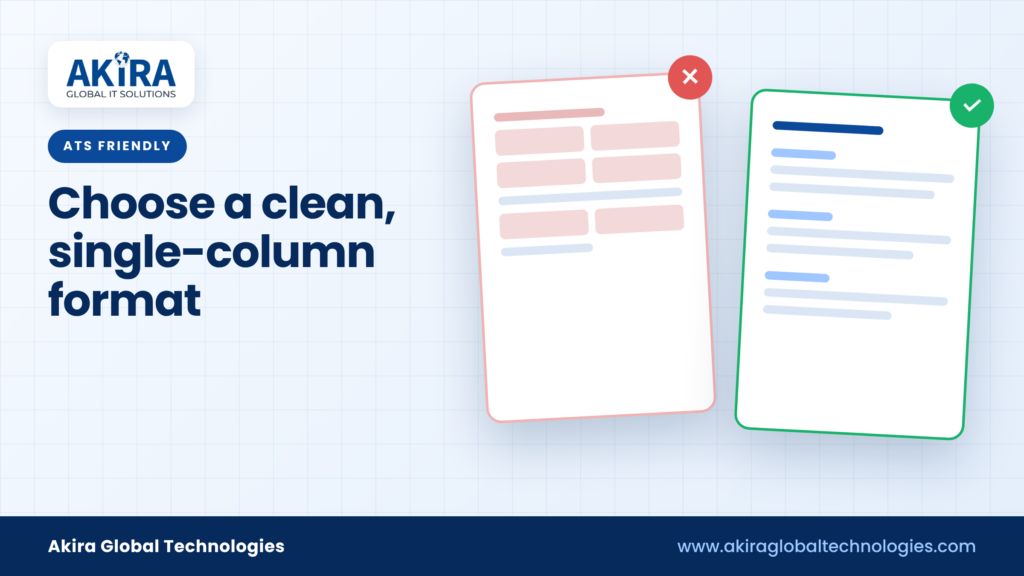
- Simple layout: one column, no tables, text boxes, icons or graphics.
- Readable fonts: Arial or Calibri at 10 to 12 points.
- Relevant keywords: reuse the posting’s own wording where it is true. If you built REST APIs, say “REST APIs”.
- File format: follow the application instructions. Otherwise use a .docx or text-based PDF named clearly, such as firstname-lastname-developer-resume.pdf.
- Consistent dates: one format throughout, such as Jan 2024.
No format guarantees selection. Keywords help, but a human reads your resume next, so write for both.
Software Developer Resume Tips for Freshers
Freshers should replace work history with evidence: projects, internships, training and visible code. These software developer resume tips fit candidates with no professional experience.
- Projects first: place two to four strong projects above education.
- Internships and training: give the name, duration and what you built.
- Coding assignments and hackathons: one line each, with the stack used.
- GitHub contributions: link repositories with clear READMEs.
- Certifications and coursework: keep only what supports the role.
- Problem-solving: link your coding practice profile honestly, without inflating ranks or counts.
Describe your role accurately. “Built the login module in a team of three” is credible, while “led development” is not if you did not. Use one test: if you cannot explain a line in an interview, remove it.
Software Developer Resume Tips for Experienced Professionals
Experienced developers should show progression, ownership and impact, and give most space to recent, relevant roles.
- Career progression: show scope growing from features to modules to services.
- Technical leadership: mention mentoring, code reviews and design decisions.
- System design: note architecture choices, such as moving a monolith endpoint to an event-driven service.
- Production deployments: mention CI/CD, monitoring and incident handling.
- Performance improvements: use real figures for latency, cost or test coverage.
- Collaboration and business impact: link work with product and QA teams to users served or time saved.
Give older roles one or two lines and drop outdated tools unless the job asks for them. Understanding emerging career opportunities and the highest paying IT jobs India 2026 can also help developers identify valuable skills to prioritise as they plan their professional growth.
Common Software Developer Resume Mistakes to Avoid
Most rejected resumes share the same avoidable problems:
- Using one resume for every job. Adjust the summary, skills order and projects for each role.
- Listing skills without proof. If Docker is listed, a project or job bullet should show it.
- Writing a long professional summary. Four lines is the limit.
- Including irrelevant information. Photos, date of birth and hobbies rarely help in tech hiring.
- Ignoring ATS readability. Columns, icons and text boxes can scramble parsing.
- Adding fake or exaggerated experience. Technical interviews expose it quickly.
- Leaving out project links. Unverifiable work carries little weight.
- Using vague descriptions. “Responsible for development” says nothing about what you did.
- Ignoring spelling and formatting errors. Inconsistent tenses and misspelled tool names, such as “Javascript” or “Github”, suggest carelessness.
Software Developer Resume Checklist Before Applying
Run through this list before you submit:
- Your summary names the role you are applying for.
- Technical skills are grouped, relevant and genuine.
- Every experience bullet shows action, technology and outcome.
- Two to four projects are listed, each with a GitHub or demo link.
- Email, phone number, city, LinkedIn and GitHub are present and tested.
- Headings are standard, the layout is single column and nothing relies on graphics.
- Keywords from the job posting appear naturally.
- Dates, fonts and verb tenses are consistent.
- You have proofread it aloud and ideally had someone else review it.
- The file name is clear, and the length is one page for freshers or up to two for experienced developers.
How Continuous Technical Learning Strengthens Your Developer Resume
Recruiters notice current skills and recent work, so steady learning shows up directly on the page. Four habits make the biggest difference:
- Programming fundamentals: data structures, SQL, Git and object-oriented design make every new framework easier to pick up.
- Real projects: building something end to end turns learning into resume lines you can defend.
- Modern technologies: add cloud, containers or AI tools once you have actually used them.
- Problem-solving practice: regular coding practice keeps you sharp for technical rounds.
Professionals looking to strengthen their technical foundation can explore the learning resources and career-focused training opportunities available through Akira Global Technologies. Its website describes a learner journey that moves through live classes, assignments, projects, mock interviews and resume building, with courses covering Java, Python and .NET full stack development as well as AI and machine learning. Whichever route you choose, judge any programme by what you can build and explain at the end of it.
Conclusion
The best software developer resume tips come down to clarity, honesty and evidence. Choose a clean IT resume format, show outcomes instead of duties, link your code, tailor each application and check every detail. No resume or training programme can guarantee shortlisting, but a focused document gives your skills the best chance of being noticed.
To keep building skills that your next resume can show, explore the courses and career resources from Akira Global Technologies, which cover industry-oriented technical learning, practical projects and career guidance.
Frequently Asked Questions
1. How do I write a software developer resume as a fresher?
Start with a short summary, a grouped skills section and two to four projects with GitHub links. Then add internships, training, certifications and education. Keep it to one page and describe your role honestly.
2. What skills should I include in a software developer resume?
Include skills from the job posting that you can genuinely use: languages like Java, Python or JavaScript, frameworks like React or Spring Boot, databases such as SQL, and tools like Git, Docker and AWS. Show teamwork and communication through your bullets rather than a separate list.
3. What is the best resume format for IT professionals?
Reverse chronological works for most IT professionals. A hybrid format helps career switchers and freshers whose projects are stronger than their job history. Avoid the functional format.
4. How can I make my software developer resume ATS-friendly?
Use one column, standard headings, a readable font and consistent dates. Skip tables, text boxes and graphics. Reuse relevant keywords from the posting truthfully, and submit a .docx or text-based PDF unless told otherwise. This improves readability but cannot guarantee selection.
5. How many projects should a software developer include in a resume?
There is no fixed rule, but two to four relevant projects suit most freshers. Experienced developers can list one to three alongside work experience. Among all software developer resume tips, this one matters: choose finished, explainable projects over a long list.